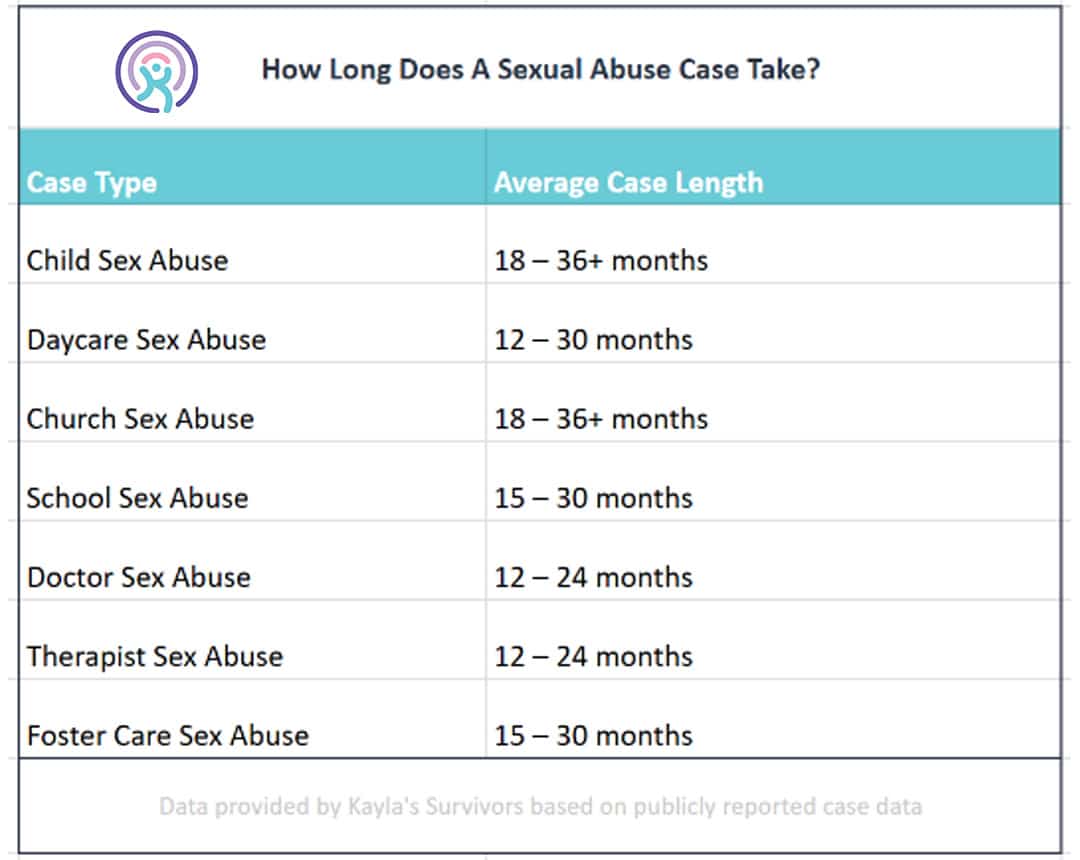
Sexual abuse cases with clear evidence and cooperative parties may settle within 9 to 12 months, while more complex cases (such as those involving multiple survivors, one or more institutions, and/or disputed facts) often take longer and settle within 12 to 36 months. It’s important to understand that there are many variables that can affect the timeline of a sexual abuse case, and timelines may be shorter or longer depending many case variables.
| Case Type | Average Case Length |
| Child Sex Abuse | 18 – 36+ months |
| Daycare Sex Abuse | 12 – 30 months |
| Church Sex Abuse | 18 – 36+ months |
| School Sex Abuse | 15 – 30 months |
| Doctor Sex Abuse | 12 – 24 months |
| Therapist Sex Abuse | 12 – 24 months |
| Foster Care Sex Abuse | 18 – 36 months |
Note: Cases involving minors or ongoing investigations often take longer due to added procedural steps like court approval of settlements, appointment of a guardian, and protective measures to ensure confidentiality. These requirements add legal review and hearings that aren’t typically required in adult cases. As a result, timelines may be extended and is accounted for in the table above.

Together, We Can Hold Abusers Accountable…
Sexual Abuse Lawsuit Timeline

1. Initial Consultation & Case Evaluation
The survivor meets with a sexual abuse attorney to discuss what happened, explore legal options, and determine whether a valid claim exists. The attorney may review any available evidence (e.g., medical records, police reports, journal entries) and provide guidance on the potential timeline and outcome.
2. Filing the Claim / Lawsuit
If the survivor chooses to proceed, a civil complaint is filed in court against the abuser, the institution, or both. The defendants are must respond within a set period, usually about 30 days.
3. Discovery Phase
Both parties exchange information and evidence, including documents, medical records, and depositions. This process can take several months or more, depending on the complexity of the case and the number of parties involved.
4. Negotiation or Mediation
Attorneys may attempt to settle the case through direct negotiation or mediation with a neutral third party. Many sexual abuse cases resolve at this stage to avoid the trauma and publicity of trial.
5. Trial (If No Settlement)
If a settlement isn’t reached, the case goes to trial, where both sides present their evidence to a judge or jury. Trials can last from several days to several weeks, and the outcome can be appealed by either party.
6. Settlement Payout or Judgment Collection
If the survivor wins at trial or accepts a settlement, the defendant must pay the agreed or court-ordered amount. Payment terms may involve a lump sum or structured payments over time.

Talk in Confidence. We’ll listen…
Key Factors That Affect Sexual Abuse Case Length
1. Evidence of Abuse
In sexual abuse cases, the presence of medical records, therapy notes, police reports, or eyewitness testimony can strongly support the survivor’s claim and lead to a quicker settlement. However, many survivors don’t disclose abuse immediately, which can make evidence gathering more complex and time-consuming.
2. Trauma and Psychological Impact
The emotional harm caused by sexual abuse is often long-lasting and deeply personal. Evaluating the psychological impact through expert assessments (e.g., therapists, psychologists) can lengthen the process but is critical for ensuring the survivor receives fair compensation for pain and suffering.
3. Age at Time of Abuse
If the survivor was a minor when the abuse occurred, the case may involve additional layers of sensitivity, protections, or even sealed court proceedings. These factors can impact the pace of the legal process, especially if the abuse occurred years ago and involves delayed reporting.
4. Willingness of the Abuser or Institution to Settle
Some defendants—especially large institutions like churches, schools, or youth organizations—may attempt to deny responsibility or delay proceedings to discourage survivors. This resistance can add years to a case. On the other hand, some institutions may opt to settle quickly to avoid public exposure or legal costs.
5. Number of Victims or Claimants
If the abuse was part of a broader pattern involving multiple survivors, it may take longer to organize and resolve the claims—especially if handled as part of a class-action, MDL, or mass tort. Coordinating among attorneys, victims, and defendants can significantly extend the timeline.
6. Court Backlogs and Procedural Delays
Courts often have overloaded dockets, and cases involving sexual abuse—particularly civil cases—may wait months just to be scheduled. If criminal proceedings are happening simultaneously, civil lawsuits are sometimes paused until the criminal trial concludes.
7. Statute of Limitations Laws
In some states, survivors have only a few years to file a lawsuit; in others, laws have been reformed to extend or reopen expired claims. Whether a survivor’s case is filed within a “lookback window” or under older laws can affect how quickly courts or defendants move forward.
Steps That Can Help Expedite Sexual Abuse Case Timelines
There are several items that can help shorten the timeline of a sexual abuse case, which typically includes the following:
- Engage an Experienced Attorney: Legal expertise is crucial in navigating the complexities of sexual abuse cases. A sexual abuse attorney with a strong background understands the emotional and legal complexities survivors face. They can streamline the process by quickly identifying key evidence, filing within statutory deadlines, and negotiating from a position of strength. Survivors benefit from trauma-informed legal support that avoids unnecessary delays or retraumatization.
- Gather Documentation Early: Collect any relevant evidence, such as medical records or correspondence, as soon as possible. The sooner documents like therapy records, police reports, journal entries, or witness statements are collected, the stronger and more efficient the case will be. In sexual abuse claims, delayed reporting is common, so any corroborating details (emails, photos, or even social media posts) can help support the survivor’s credibility. Prompt evidence collection prevents issues if defendants try to argue lack of proof or diminished memory over time.
- Consider Mediation: Alternative dispute resolution methods can sometimes lead to quicker settlements. Private mediation allows survivors to avoid the stress of public court proceedings and often results in faster resolution. It can also give survivors more control over the terms of the agreement, including confidentiality, apologies, or institutional reforms. While it’s not appropriate in every case, skilled attorneys can assess whether it’s a viable option without compromising justice.
- Stay Engaged and Communicate Regularly With Your Attorney: Survivors who stay informed and responsive help move the case forward more efficiently. Missing appointments, not providing documentation, or being hard to reach can delay settlement offers or court deadlines. A strong, consistent line of communication ensures that legal strategy aligns with the survivor’s needs and timeline.
Get Help With Your Sexual Abuse Case From The Attorneys At Kayla’s Survivors
If you or a loved one is a survivor of sexual abuse, the attorneys at Kayla’s Survivors can help you get started with your case, and ensure the best possible outcome in the shortest amount of time. Our sexual abuse lawyers have helped survivors recover over $1 billion in compensation as a result of settlements and verdicts. Get help with your case by calling or requesting a case evaluation online – 100% confidential and completely free.